
Ford DR Medical Examination Vehicle
- By: CLW GROUP
- 2026-03-29
Ford DR Medical Examination Vehicle: Key Details in the Retrofitting Process
Meta Description: Discover the key retrofitting details of a Ford DR medical examination vehicle. From internal frame production (Image 01, 02) to wooden soundproofing and lead room installation — learn how a standard van becomes a mobile X-ray clinic.
Introduction
Converting a standard Ford chassis into a fully functional DR medical examination vehicle requires far more than basic carpentry and wiring. It involves strict radiation protection, precise equipment integration, and meticulous acoustic treatment. In this article, we walk you through the critical steps of DR retrofitting, using actual images from our workshop: internal skeleton fabrication , wooden soundproofing panels , and lead room assembly.
1. Internal Frame Production – The Backbone of a Mobile DR Unit
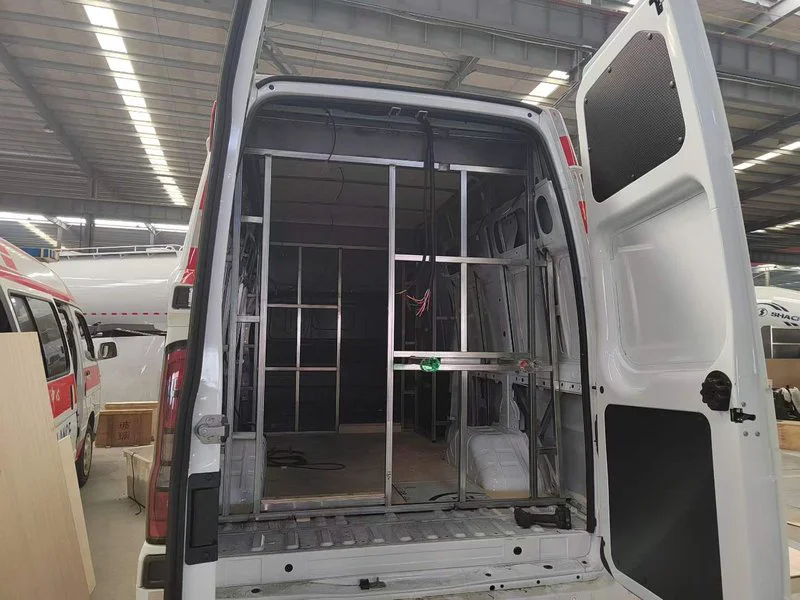
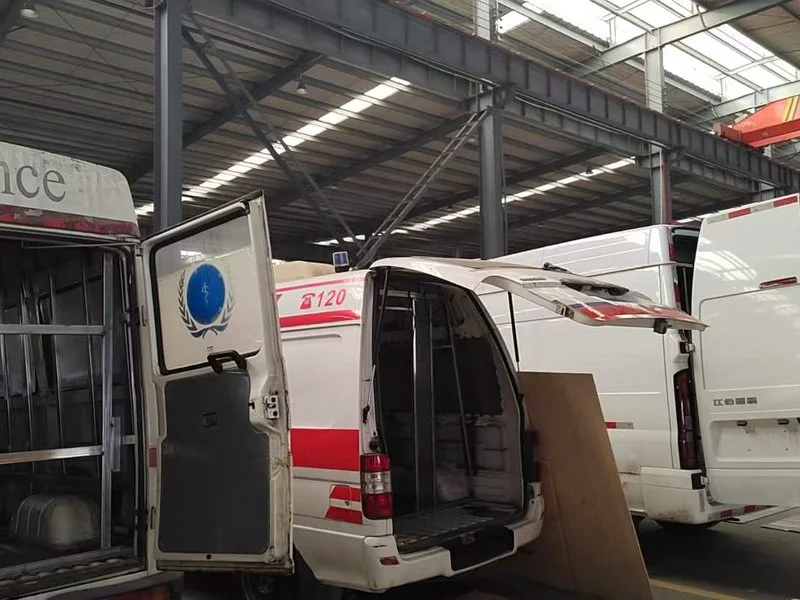
Before any medical equipment is installed, the empty cargo area must be transformed into a rigid, weight‑bearing structure. Image 01 and Image 02 show the internal skeleton production stage of this Ford DR medical examination vehicle.
Material choice: High‑strength steel square tubes are welded to form a framework that supports the digital radiography (DR) system, the operator’s console, and the lead shielding.
Precision mounting: Every bracket is pre‑drilled and aligned to accept the X‑ray generator, flat panel detector, and high‑voltage cables. This ensures zero interference with Ford’s original chassis components.
Load distribution: The skeleton distributes the heavy weight of the DR equipment evenly, preventing chassis torsion during driving.
2. Wooden Soundproofing – Reducing Noise for a Comfortable Work Environment
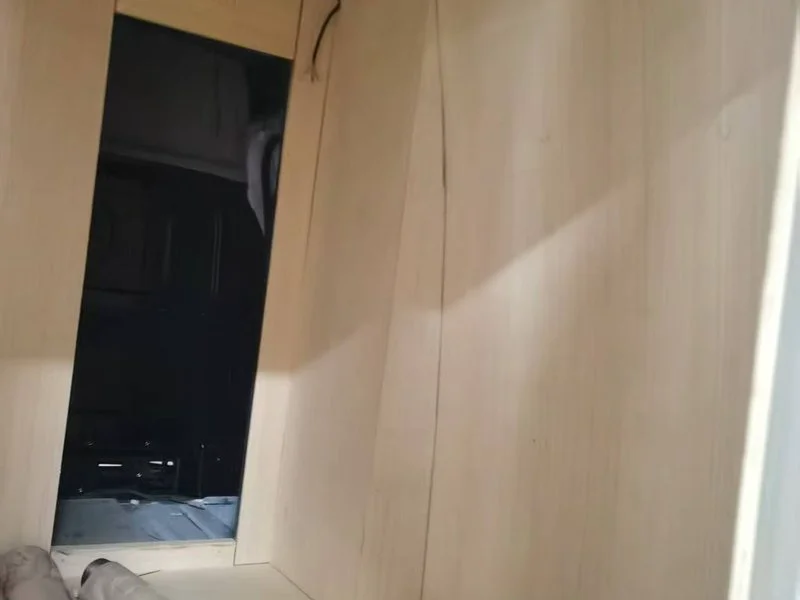
A DR medical examination vehicle is often used in busy urban areas or hospital parking lots where external noise can distract both the technician and the patient. Image 03 illustrates the wooden soundproofing layer installed after the frame is completed.
Multi‑layer design: Acoustic foam is sandwiched between plywood panels, then covered with a washable medical‑grade vinyl surface.
Noise reduction effect: This construction lowers ambient noise by up to 25 dB, creating a calm atmosphere for X‑ray examinations.
Thermal insulation bonus: The same wooden panels also provide thermal insulation, helping the mobile DR unit maintain stable temperature for sensitive electronics.
3. Lead Room Installation – The Most Critical Safety Step
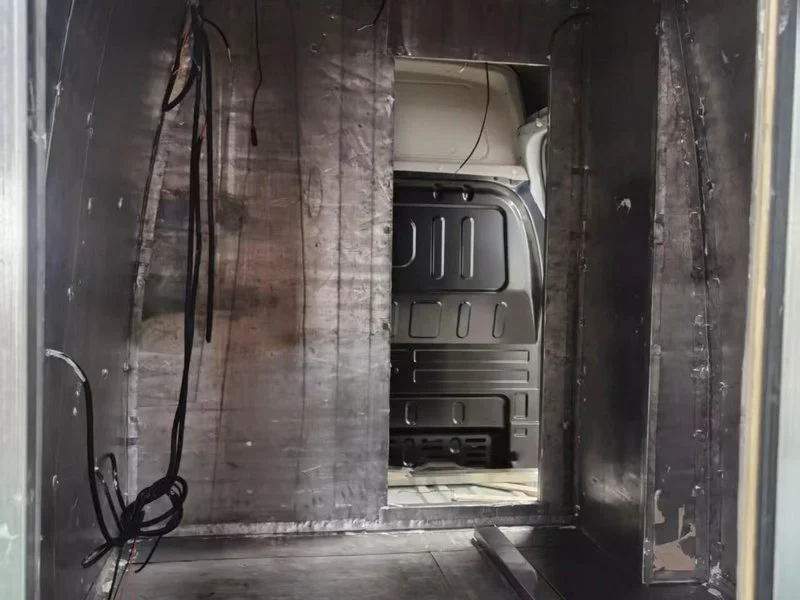
The heart of any DR medical examination vehicle is the lead room (lead‑lined enclosure). This is where the X‑ray tube and the patient are positioned. Without proper lead shielding, the vehicle cannot meet radiation safety standards.
3.1 Lead Sheet Lamination
Lead equivalent thickness: Typically 2‑3 mm lead equivalent for walls, floor, and ceiling, depending on the X‑ray tube’s kVp rating.
Seamless overlapping: Lead sheets are overlapped by at least 10 mm at all joints and mechanically fastened to the steel skeleton before being sealed with lead‑loaded putty.
3.2 Lead Glass Window
A lead‑impregnated glass window (often 15×15 mm lead equivalent) is installed in the control area, allowing the technician to see the patient without radiation exposure.
3.3 Door and Interlock System
The lead‑lined door is fitted with a safety interlock switch that automatically cuts off X‑ray emission if the door is accidentally opened during exposure.
4. Integration of the Digital Radiography (DR) System
Once the skeleton, soundproofing, and lead room are completed, the actual DR system is installed:
X‑ray generator mounted on a ceiling rail or column.
Flat panel detector stored in a protective holder.
Workstation with high‑brightness medical display and DICOM networking.
Power system – an isolated auxiliary generator or high‑capacity inverter to ensure stable power for the DR unit while the Ford engine is off.
5. Quality Control and Testing Before Delivery
Every Ford DR medical examination vehicle undergoes a strict testing protocol:
Lead shielding test – Using a radiation meter to confirm no leakage outside the lead room.
Sound level measurement – Verifying that interior noise stays below 55 dB with engine running.
X‑ray image quality – Standard phantom imaging to ensure resolution and contrast meet diagnostic requirements.
Conclusion
Retrofitting a standard Ford van into a professional DR medical examination vehicle is a complex, multi‑stage process. From the internal skeleton production (Image 01, 02) and wooden soundproofing (Image 03) to the lead room installation, every detail directly affects safety and image quality. If you are looking for a reliable mobile DR unit or need DR retrofitting services, contact our engineering team for a customized solution.
Call to Action:
Need a turnkey Ford DR medical examination vehicle? We offer complete design, manufacturing, and certification. Request a quote today.